
Church Of Our Lady of Remedies, Luanda
On this page:
I . Historical context of the place
II . History of the church of Our Lady of Remedies
III . Description
IV . Our Lady of Remedies: history of the cult and iconography
I . HISTORICAL CONTEXT OF THE PLACE
In the early 16th century, Luanda had only one parish, based in the church of Our Lady of the Conception, in Cidade Alta [Upper City]. In the former Rua da Praia, by the bay, in Cidade Baixa [Lower City], stood a small chapel dedicated to the Holy Spirit.
As a consequence of the area’s great development, the second parish of Luanda was created in 1626 by Bishop Francisco Soveral (1626-1642), with its seat in the small chapel of the Holy Spirit. The patron saint of this parish was St. Pedro Gonçalves (or St. Elmo), Confessor, the protector of seafarers, for which reason the church was also known as church of the Holy Body (of St. Elmo).
Em 1679, after the Dutch occupation, the chapel was in ruins and the parish was transferred to the church of Our Lady of Remedies, built in the meantime.
The small chapel of the Holy Spirit was restored, blessed and reopened in 1679 under the title of Holy Body. The corresponding Brotherhood was made up of seafarers. In 1895, the church was still open, but in a poor state of repair. It was demolished in 1908, leaving in its place a square presently known as Largo do Atlético.
Due to its proximity to the bay, the area became one of the most important places in Luanda, a meeting point for the population and one of the oldest marketplaces in the city.
II . HISTORY OF THE CHURCH OF OUR LADY OF REMEDIES
The church of Our Lady of Remedies was built around 1655, next to the bay, on the initiative of traders and seafarers. It was opened for worship on August 15th, 1667.
In 1679, it was made the seat of the Parish of Our Lady of Remedies of Praia by Bishop Manuel da Natividade (1675-1885), in a solemn ceremony attended by all the clergy, the Senate of the City Council and many people.
In the following period, the Brotherhood of the Blessed Sacrament appealed to royal help, mainly to provide the church with the liturgical implements necessary for worship.
In the first half of the 18th century, the church benefited from important legacies from benefactors, particularly the parish priest, Father Luís Baines.
In 1745, it was one of the venues selected for the ecclesiastical conferences set up by the bishop of the Diocese of Angola and Congo, Brother António do Desterro (1740-1745). These conferences were meant to prepare clergymen, and the choice of the church clearly demonstrates how important the parish was considered in the city of Luanda.
In 1828, the Church of Our Lady of Remedies was raised to the status of cathedral, replacing the original cathedral – the Church of Our Lady of the Conception –, where worship had been closed as the church threatened to collapse. By the end of the 19th century, it was seriously dilapidated and was also closed to worship in 1876.
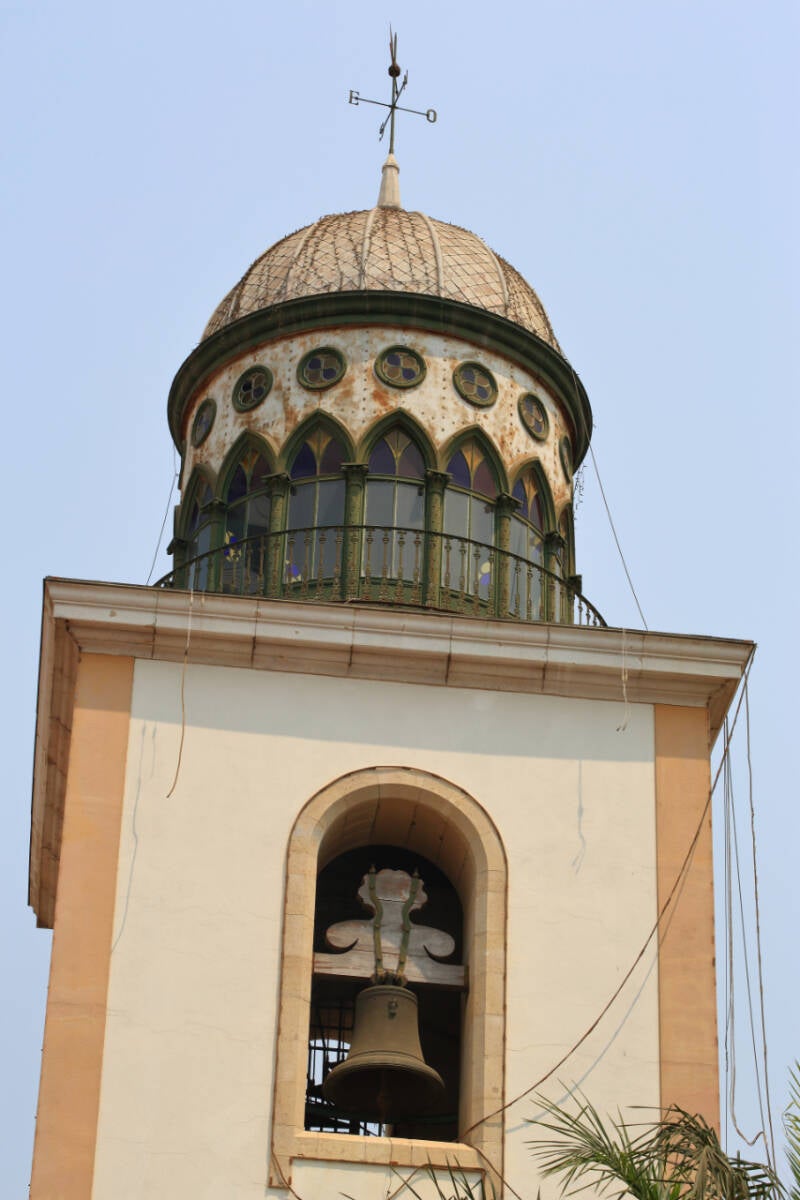
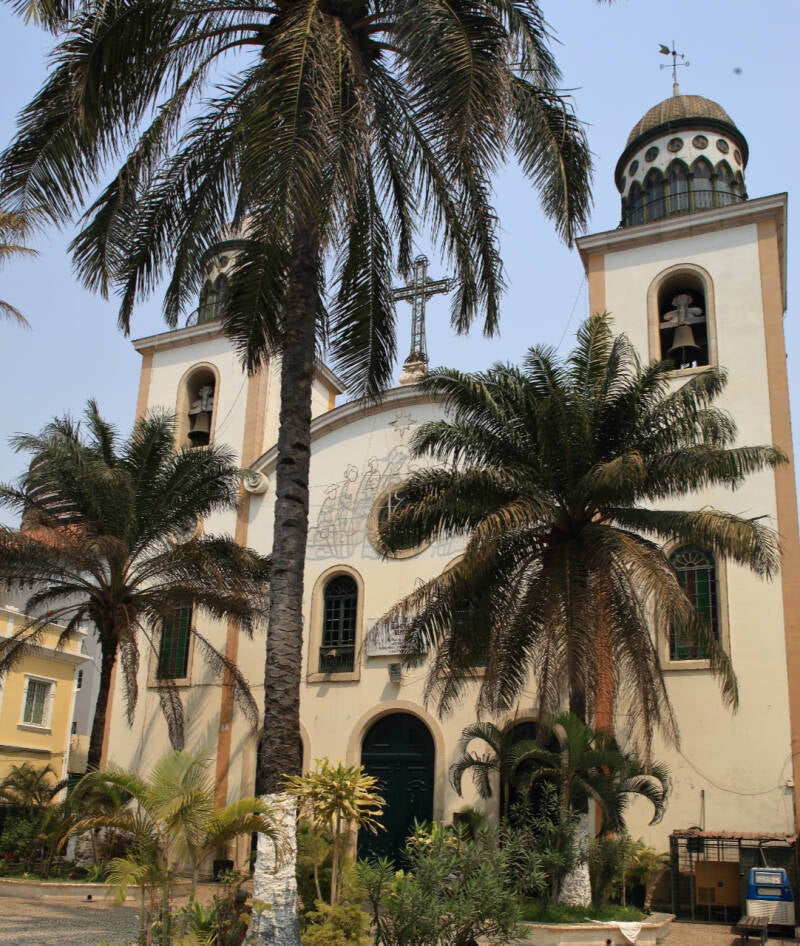
The reconstruction was lengthy and the restoration went to considerable depth. Alterations were made that changed the original design: the baroque façade was simplified, the bell towers topped by turrets with a lantern, the chancel enlarged and the ceiling supported by an iron structure. It was solemnly reopened on August 15th, 1897.
In 1940, it became the seat of the Metropolitan Cathedral Church of Luanda, created by the Bull Sollemnibus conventionibus of Pope Pius XII, with the title Holy Saviour and Our Lady of Remedies, in memory of the former diocese. Bishop Moisés Alves de Pinho (1932-1966) was appointed the first Archbishop of Luanda.
The church was classified as a Monument of Public Interest in 1949 for its important historical and cultural heritage value.
In 1986, the Cathedral was transferred to the Church of Jesus by Bishop Alexandre do Nascimento (1925-2024) and the Church of Our Lady of Remedies remained the seat of the Parish of Our Lady of Remedies. Travessa da Sé [Cathedral Alley] is still in the vicinity, a legacy of the area's recent past.
In 1999, the remains of Bishop Moisés Alves de Pinho were transferred to the old Cathedral, in accordance with his wishes expressed in his will, to be close to the people he loved so much.
III . DESCRIPTION
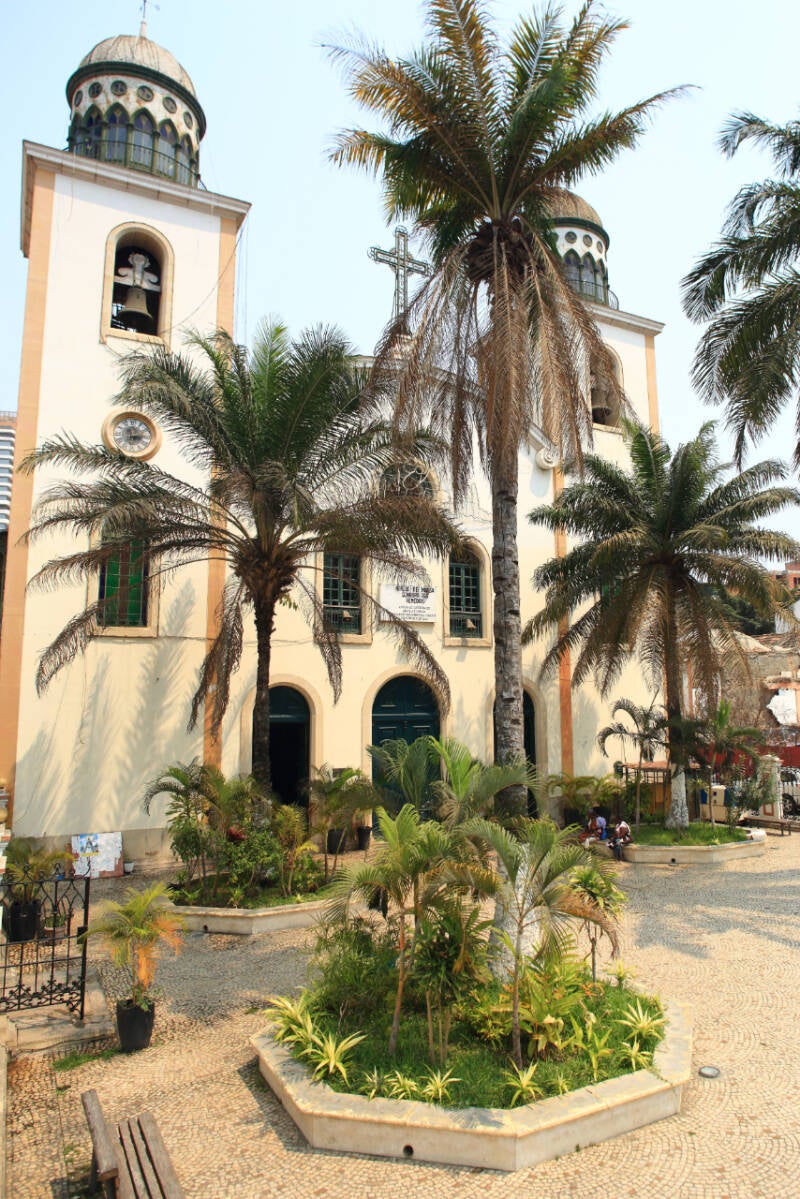
The honourable church of Our Lady of Remedies is located in Cidade Baixa [Lower City], next to the Bay, where the harbour trade used to take place.
The large churchyard at the front is landscaped with leafy palm trees and has a railing with pillars decorated with the Cross of Christ.
The main façade, restored in 1897, is particularly harmonious. Painted white with ochre-coloured corners, it ends in a curved gable with side wings and a cross decorated with a halo. The three portals are topped by tall windows with balconies and circular eye-windows. Several inscriptions attest to the antiquity of the monument and its heritage value.
The bell towers, an important reference in the city of Luanda, are topped by a drum and a lantern. The clock can be seen in the left tower; at the base of the right tower, the old Fire ring table is still present – according to a notice dated 1839, it was used to warn people of a fire, a common hazard at a time when most of the city's buildings had thatched roofs.
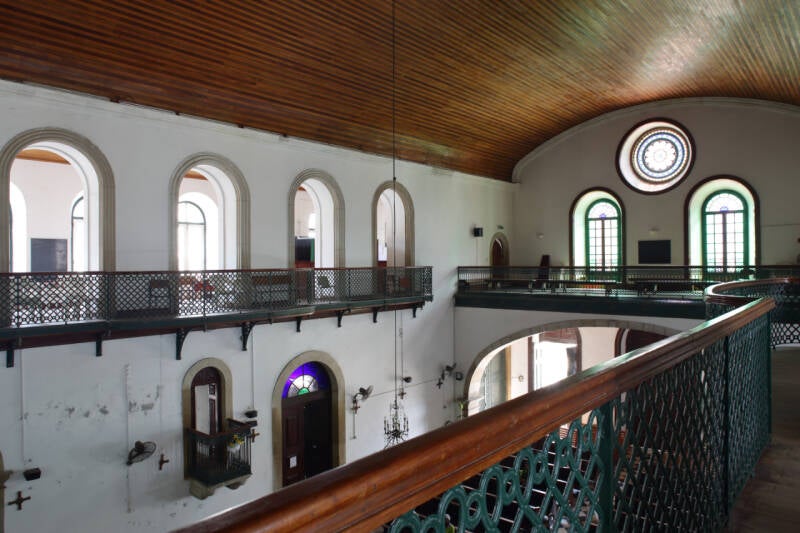
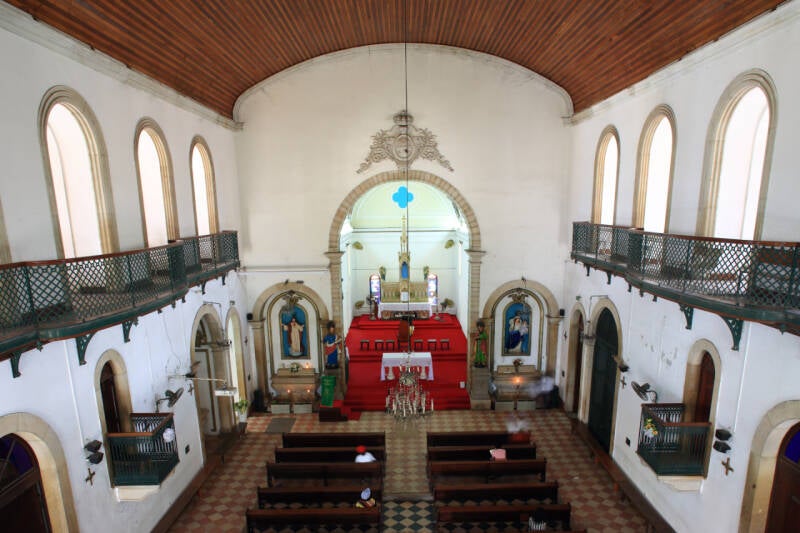
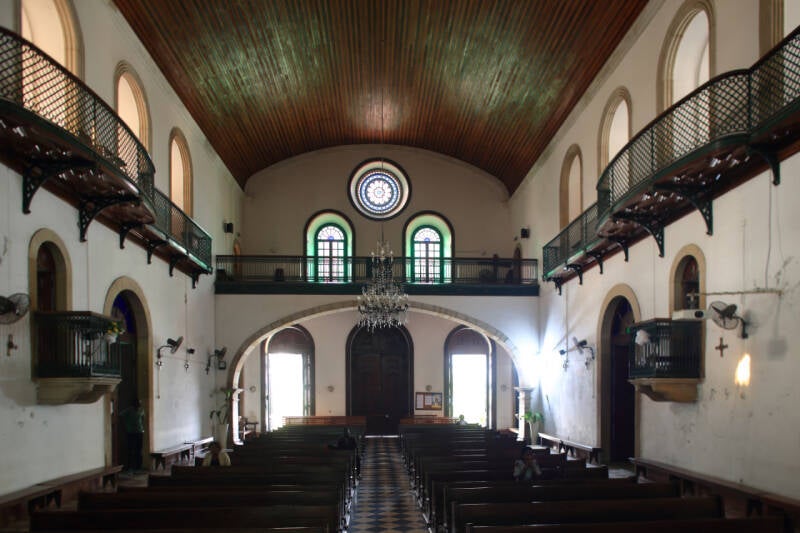
The interior is spacious, well-lit and highly original. The baptistry is in the under-choir and features a tile panel – possibly from the late 19th century – depicting the Baptism of Christ, and a remarkable stone baptismal font from the 17th century. At the entrance to the nave are two holy water fonts, carved in the same style as the baptismal font.
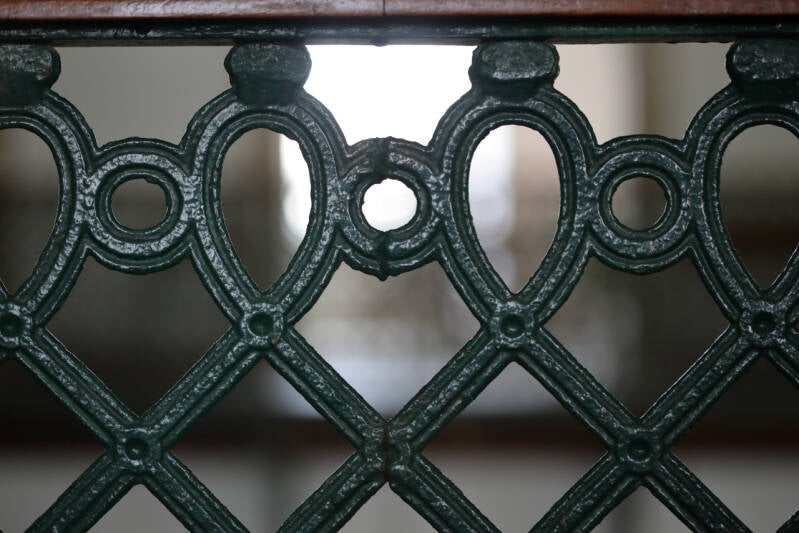
The upper part of the nave is lined with two unique tribunes with wrought iron railings, a decoration that reappears in the two pulpits and the high choir.
On the left is the chapel of Our Lady of Fatima, with a marble altar and gilded woodwork details.
The triumphal arch is topped by the royal coat of arms with a crown, and the images of Saint Peter and Saint Paul on the sides, standing on pedestals with inscriptions: TU ES PETRUS ET SUPER HANC PETRAM AEDFICABO ECCLESIAM MEAM S. Mat. XVI 18 (“And I tell you that you are Peter, and on this rock I will build my church Matthew 16:18”); and PAULUS VOCATUS APOSTOLUS JESU CHRISTI PER VOLUNTATEM DEI Ep 1 ad Cor I, 1 (“Paul, called to be an apostle of Christ Jesus by the will of God 1Corinthians 1:1”).
In the chapel on the right-hand side, the venerable image of Our Lady of Remedies – the patron saint of the church – is placed on a marble altar with low reliefs. On the left, there is the chapel of the Sacred Heart of Jesus, also with a marble altar and similar decoration.
At the top of the nave are two tombstones with inscriptions, namely those of Francisco Barroso (died in 1682), who contributed greatly to the foundation of this church; and Maria Fernandes Lopes, deceased in 1821.
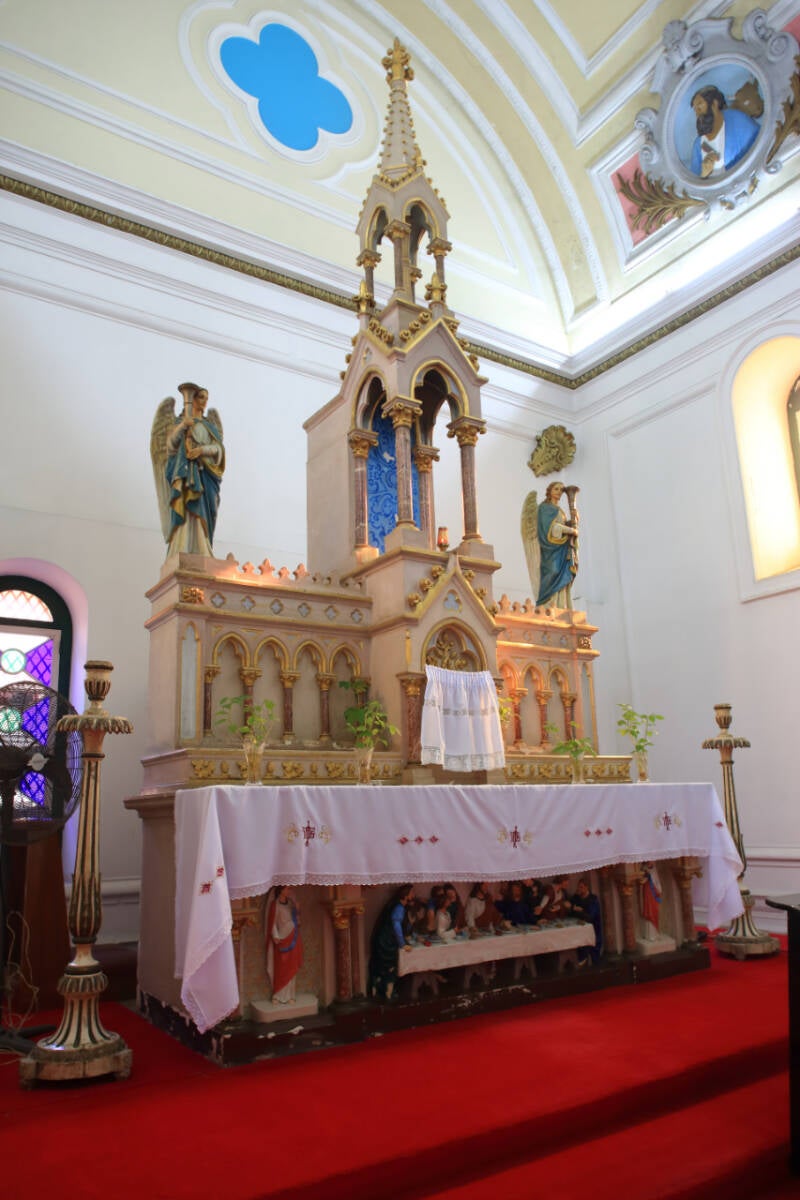
In the chancel, the neo-Gothic altarpiece stands out, in polychrome carving, topped by a small temple with turret and a Latin cross. The tabernacle, in the centre, is framed by towered arches and magnificent musician angels on the side. At the base is a unique polychrome sculptural set depicting the Last Supper.
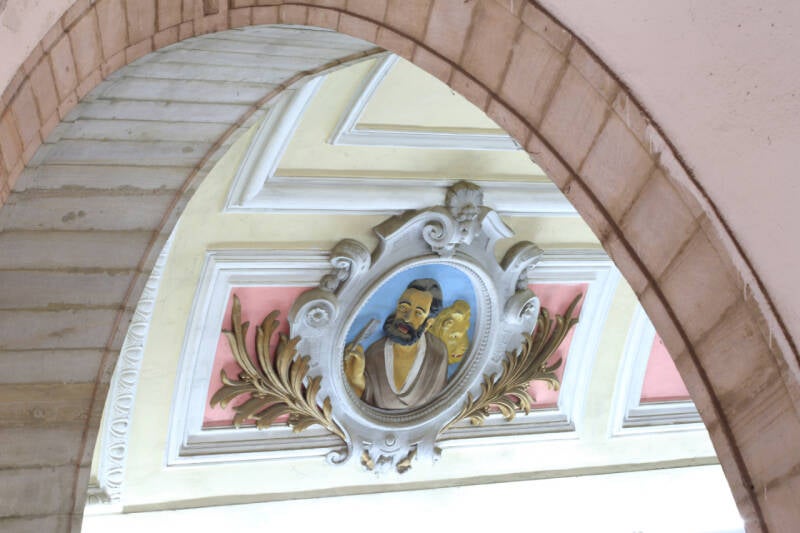
The vault has a eucharistic symbol in the centre – a monstrance – and, on the sides, relief stucco panels depicting the Evangelists and their attributes: Saint Luke and Saint John on the right, Saint Mark and Saint Matthew on the left.
Also noteworthy is the impressive crucifix on the left side wall, an image of great devotion marked by the passage of time.
In a chapel in the side annexe is the grave of Bishop Moisés Alves de Pinho, the last Bishop of the Diocese of Angola and Congo and the first Archbishop of the Diocese of Luanda.
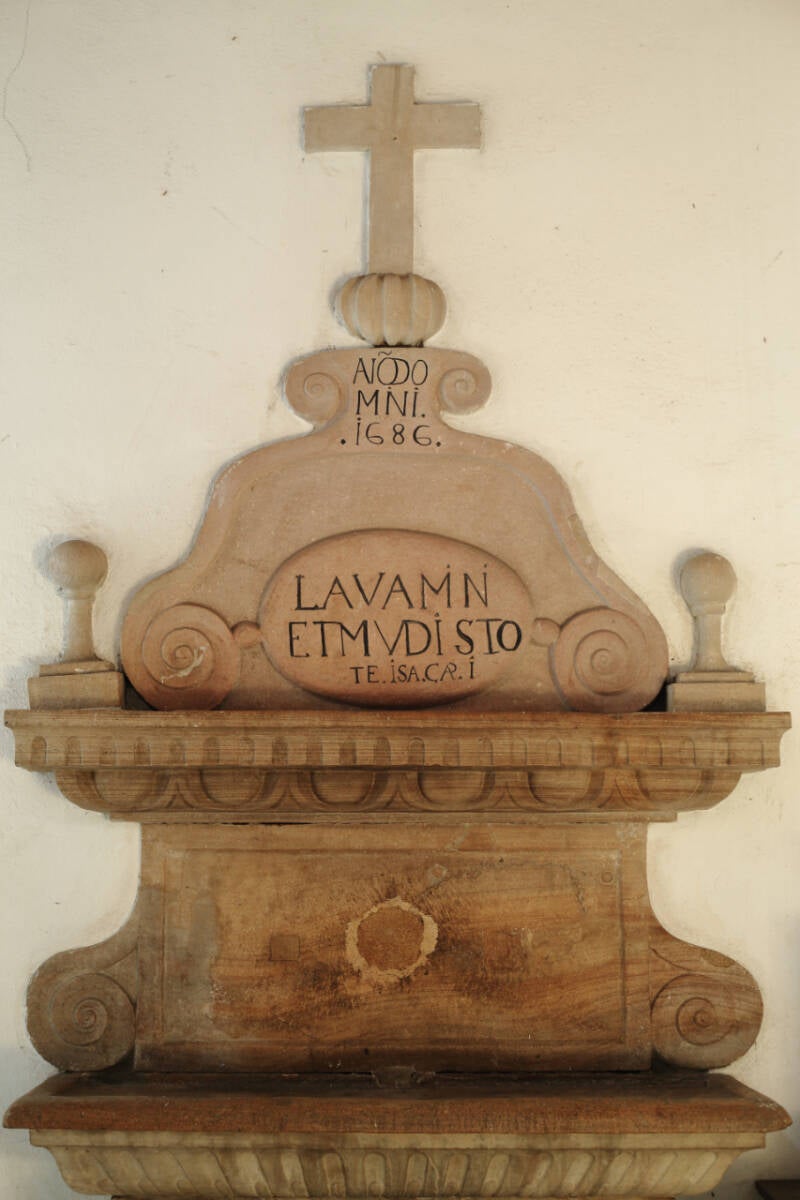
The sacristy features a stone lavabo with the inscription ANO DOMINI. 1686 LAVAMINI ET UM[N]DI [E]STOTE ISA. CAP. I (“Year of the Lord 1686 Wash and make yourselves clean Isaiah, chapter 1 [16]”).
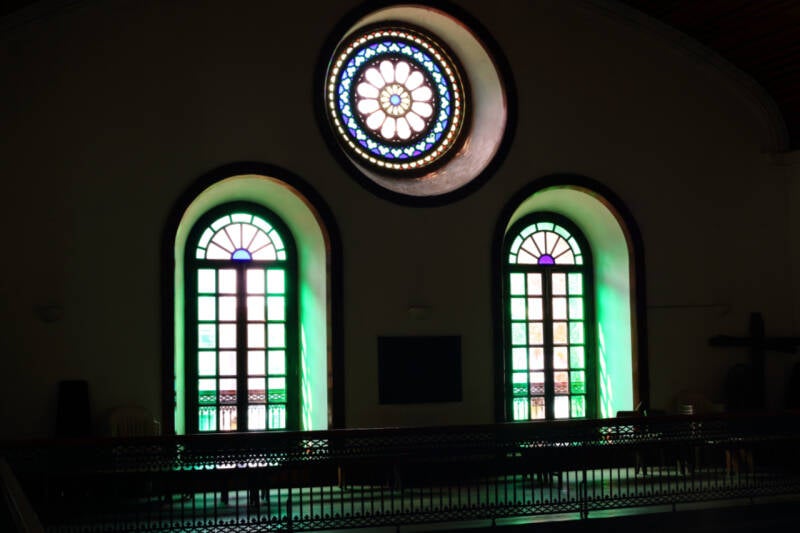
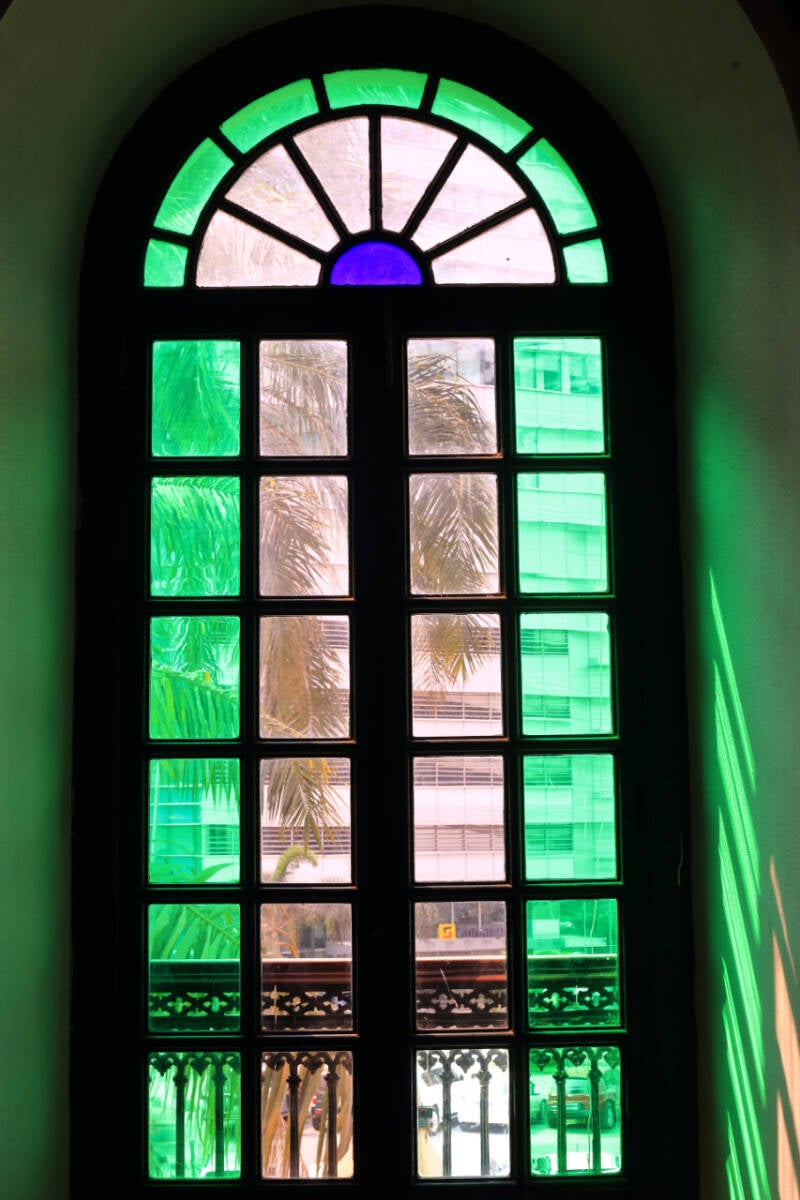
In the high choir, the windows with balcony and circular eye-window filter the light from the outside, lighting the whole interior of the church in a most particular fashion.
IV . OUR LADY OF REMEDIES: HISTORY OF THE CULT AND ICONOGRAPHY
The invocation of Our Lady of Remedies originated in the Order of the Holy Trinity, founded in the late 12th century by Saint John of Matha and Saint Felix of Valois. Its primary mission was to rescue prisoners, particularly Christian captives under Moorish rule.
The invocation originated with Saint John of Matha (1160-1213) who once turned to the Virgin, when he lacked the amount of money needed to ransom some captives. Tradition has it that Our Lady appeared to him and handed him a purse of coins – a remedy for the situation he was in. This invocation would later include the rescue or liberation from all kinds of ailments and became the most effective medicine for curing all diseases of body and soul.
Under the invocation of Our Lady of Remedies, chapels multiplied and large shrines were erected in Africa, Brazil and India.
Our Lady of Remedies is represented with the Child on her lap and, in the earliest iconography, with a purse in her right hand – an allusion to the ransom of captives. In later representations, such as the image in this church a crown is added – the Queen of Heaven.
Ever since the early days of the city, numerous devotees have turned to Our Lady of Remedies – patron saint of the old Cathedral of Luanda –, invoking the mighty protection of the Heavenly Mother.
REFERENCES
- GABRIEL, D. Manuel Nunes, Padrões da Fé - As igrejas antigas de Angola, Luanda, Edição da Arquidiocese, 1981.
- MATTOSO, José (dir.) - Património de Origem Portuguesa no Mundo, arquitectura e urbanismo: África, Mar Vermelho e Golfo Pérsico. Lisboa: Fundação Calouste Gulbenkian, 2010.
- JACOB, Berta Maria Oliveira, A Toponímia de Luanda – das memórias coloniais às pós-coloniais, Dissertação de Mestrado, Lisboa, Universidade Aberta, 2011.
- MARIZ, Vera Félix, A “memória do império” ou o “império da memória” a salvaguarda do património arquitectónico português ultramarino (1930-1974), Dissertação de Doutoramento, Lisboa, Universidade de Lisboa, 2016
Adicionar comentário
Comentários